Press
The Architecture of Skincare
3 MIN READ

 developmentPress
Your passport says “arrived.” Your skin’s internal clock may not agree.
In 30 seconds
You land in another country. The light is wrong, and dinner feels oddly early. Your body wants bed while the clock insists it’s lunchtime. Your skin looks flatter, more tired and a little less comfortable than usual.
What happens to skin on a flight has already become something of a beauty conversation. Recent coverage across Yahoo Life , The Irish News , RTÉ Lifestyle and MSN has explored the familiar post-flight complaints of dryness, dehydration and tired-looking skin. WALDOR has also been part of that conversation from a clinical perspective. In recent coverage, Dr Azadeh Manesh of Waldor Clinic explained that cabin humidity can sit at around 10-20%, compared with roughly 40-60% in a normal environment, increasing transepidermal water loss. The result, she explains, can be “skin tightness, dehydration and a dull and flat complexion”.
Independent measurements back this up. Studies of commercial flights consistently find cabin humidity far below comfortable indoor levels, often dropping to around 10% soon after take-off. Experiments simulating a long flight show that skin loses noticeably more water in these conditions. Cabin air mainly dries the skin’s surface rather than dehydrating your whole body, which is why a good moisturiser makes such a difference.
Dr Manesh’s advice is refreshingly simple:
Like almost every tissue in the body, skin follows circadian rhythms. It contains its own peripheral clocks, which help coordinate barrier behaviour, cell turnover, temperature, blood flow and water loss across day and night.
“Long-haul travel is more than dry air. Your skin is adjusting inside a body whose internal signals are out of sync with the world around it.”
Jet lag is a mismatch between your body’s internal timing and the outside world. Light is the main signal for resetting the clock. Meals, movement and temperature nudge it too. Cross several time zones and all of those cues arrive on the wrong timetable.
None of this means a single flight accelerates ageing. Post-travel skin is the visible sum of small disruptions: drier air, broken sleep, a new light-dark cycle and a routine that has lost its rhythm.
Sleep is a biologically active state, and circadian timing helps organise when different processes happen. Research links good sleep and healthy circadian timing with skin barrier maintenance and repair.
Before adding another product, restore the basics: consistent bedtime, regular meals and well-timed daylight. They won’t make exciting shelf content, but they help your body find its new rhythm.
No serum can tell your skin what time it is. Restore the signals that set the rhythm instead.
Landing checklist
After a long journey, it’s tempting to reach for whatever is trending: the newest active, the boldest treatment, the promise of a one-night reset. But skin rarely works to such neat deadlines. A drier environment, altered sleep and a shifted light-dark cycle are the real causes of that tired look, and no single ingredient can correct them overnight.
The more useful question isn’t “what can undo this journey?” but “what does my skin actually need while it finds its rhythm again?” That shift is subtle but important. It moves you away from emergency correction and towards supporting skin according to its condition.
The beauty industry is good at turning temporary discomfort into an emergency. Rescue, reset, repair, recover: the motto is catchy, but tired skin doesn’t automatically need more intervention.
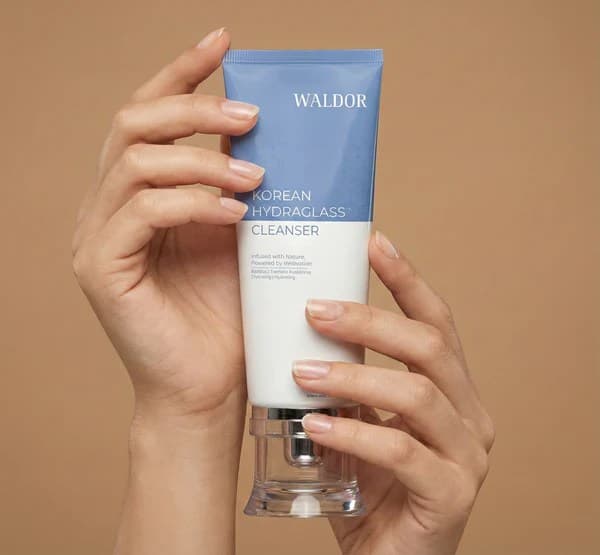
This is the philosophy behind WALDOR Skin. Its Bio-fermented actives and skin-supportive formulations reflect the same principle that runs through this whole discussion: sometimes skin needs less noise, better support and enough time to settle.
Skin jet lag isn’t something that happens only at 35,000 feet. The aeroplane is just the beginning. The more interesting part starts after landing, when your body meets a new light-dark cycle, a new timetable and a new environment. Post-travel skin isn’t asking to be rescued from the journey. It may simply need the right conditions to find its rhythm again.
“Because sometimes the most sophisticated skincare response isn’t another step. It’s giving your skin time.”